By Conservation Areas Initiative Team
Water connects every part of our province, from the 10,000 lakes to the smallest streams, all of that flowing happens within watersheds. These are the natural systems that shape how water moves across the land. Understanding watersheds helps us see the bigger picture of how our water can stay healthy, how wildlife thrives, and how upstream actions can cause big downstream impacts.
What is a Watershed?
A watershed is an area of land where all the water, such as rain or melting snow, drains into the same place. While this water flows into streams, wetlands, and rivers, and eventually reaches larger bodies of water like lakes, bays, or oceans. Some of the water travels across the surface, while some sinks into the ground, where it supports plants, wildlife, and people living in the watershed.
Every watershed is unique. The direction and speed of water flow depend on the land’s elevation, shape, and soil types. Watersheds are considered to be living communities. From mammals, insects, and plants to human activities such as housing, agriculture, and development, we rely on watersheds on a daily basis.
Watershed vs Drainage Basin
A drainage basin is the area of land where all the water flows into a particular river. While a watershed is the higher ground that surrounds it, creating the boundary between neighbouring drainage basins.
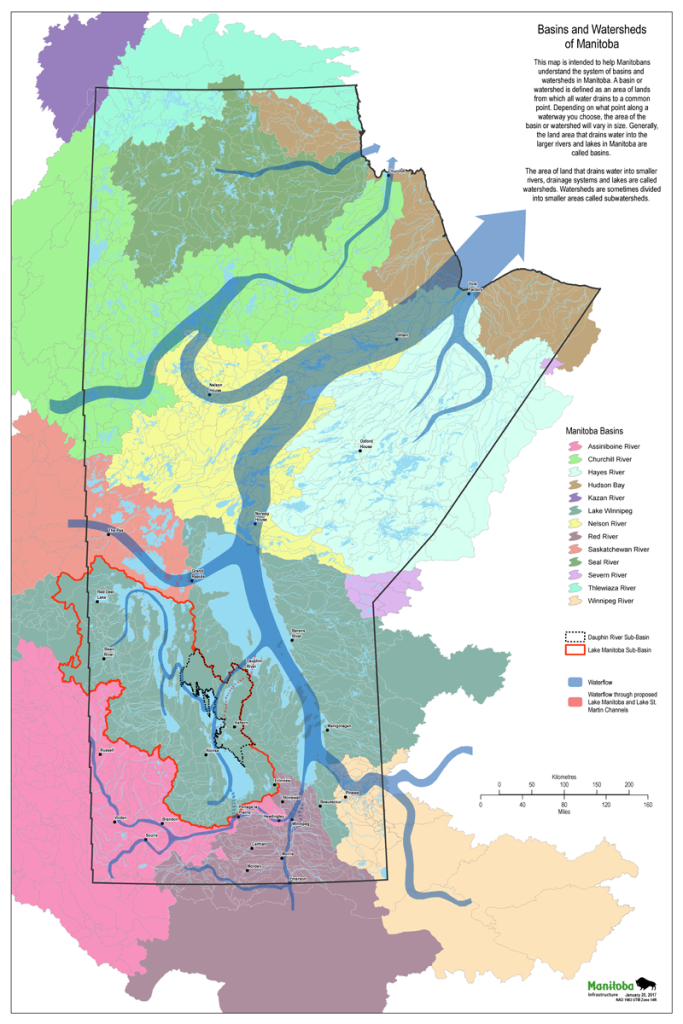
The Nelson River drainage basin is one of the largest river basins in the world influencing Manitoba’s waters. It spans a large area, stretching from the Rocky Mountains in the west to Lake Superior in the east, traveling through streams and rivers until it reaches Lake Winnipeg. From there, it flows into the Nelson River and into Hudson Bay. Because this drainage basin covers such a large part of Canada and even part of the United States, Manitoba’s water quality is strongly affected by human activities happening far beyond the province’s borders.
Subwatershed
A subwatershed is a smaller section inside a bigger watershed. All the water in this area drains into the same river, lake, or wetland. Breaking watersheds into these smaller parts helps people focus on local issues—like erosion, flooding, and protecting natural areas—so they can manage and plan more effectively.

Watersheds in Manitoba
In southern Manitoba, there are 14 watershed districts with many subwatersheds within each area. In 2020, following the announcement of the Watershed Districts Act, these 14 Watershed Districts were able to access new tools and resourcing to ensure resilience against major natural impacts such as floods, droughts, nutrient loading, climate change and more.
Interlake
The East Interlake Watershed District has 4 major subwatersheds, each with its own watershed management plan, which you can view here:
Why does this Matter?
Healthy watersheds are the foundation of strong ecosystems, local economies, and human health. Managing our watersheds in a sustainable way helps ensure clean water and a thriving community for all living things.
One of the goals of the Conservation Areas Initiative is to support the locally developed watershed management plans, as mentioned above. Many of the main ideas in these plans align directly with the goals of the Initiative, including: Protect and restore natural areas like wetlands, preserve and improve water quality in lakes and streams, improve watershed health awareness, and ensure safe drinking water.
Conclusion
Watersheds shape every part of Manitoba’s landscape, connecting our lakes, rivers, communities and ecosystems. By understanding how water moves through these natural systems we can better appreciate and understand how closely our environment and our actions are connected.
It is important that we plan to protect the health of our watersheds in our local communities. Indigenous Nations are often the first to recognize the importance of these efforts, and the connection between watershed health and the wellbeing of all our living relatives. These efforts help reduce the impacts of floods and droughts, improve water quality, support wildlife habitat and strengthen communities. Caring for our watersheds means caring for the future generations in Manitoba.
Learn More Here
Learn more about Watersheds from the Government of Canada
Check out “How healthy wetlands support biodiversity” from Ducks Unlimited.